At Filterbuy, we’ve seen thousands of homeowners ask the same thing: “Why is my 10x25x4 filter getting dirty so fast?” After years of analyzing customer feedback, HVAC system diagnostics, and filter performance across diverse environments, we’ve learned that this issue rarely has just one cause. In fact, based on our experience servicing homes nationwide, a prematurely dirty filter often points to hidden air quality issues, oversized HVAC loads, or ventilation imbalances most people overlook.
In this guide, we’re sharing what we’ve learned from real-world installations and customer use cases—why your filter might be clogging more quickly than expected, how to tell if it’s affecting your system’s efficiency, and practical, expert-backed solutions that go beyond the standard “change it more often” advice. If you're serious about optimizing your air quality and protecting your HVAC investment, you’re in the right place.
Quick Answers
10x25x4 Air Filters
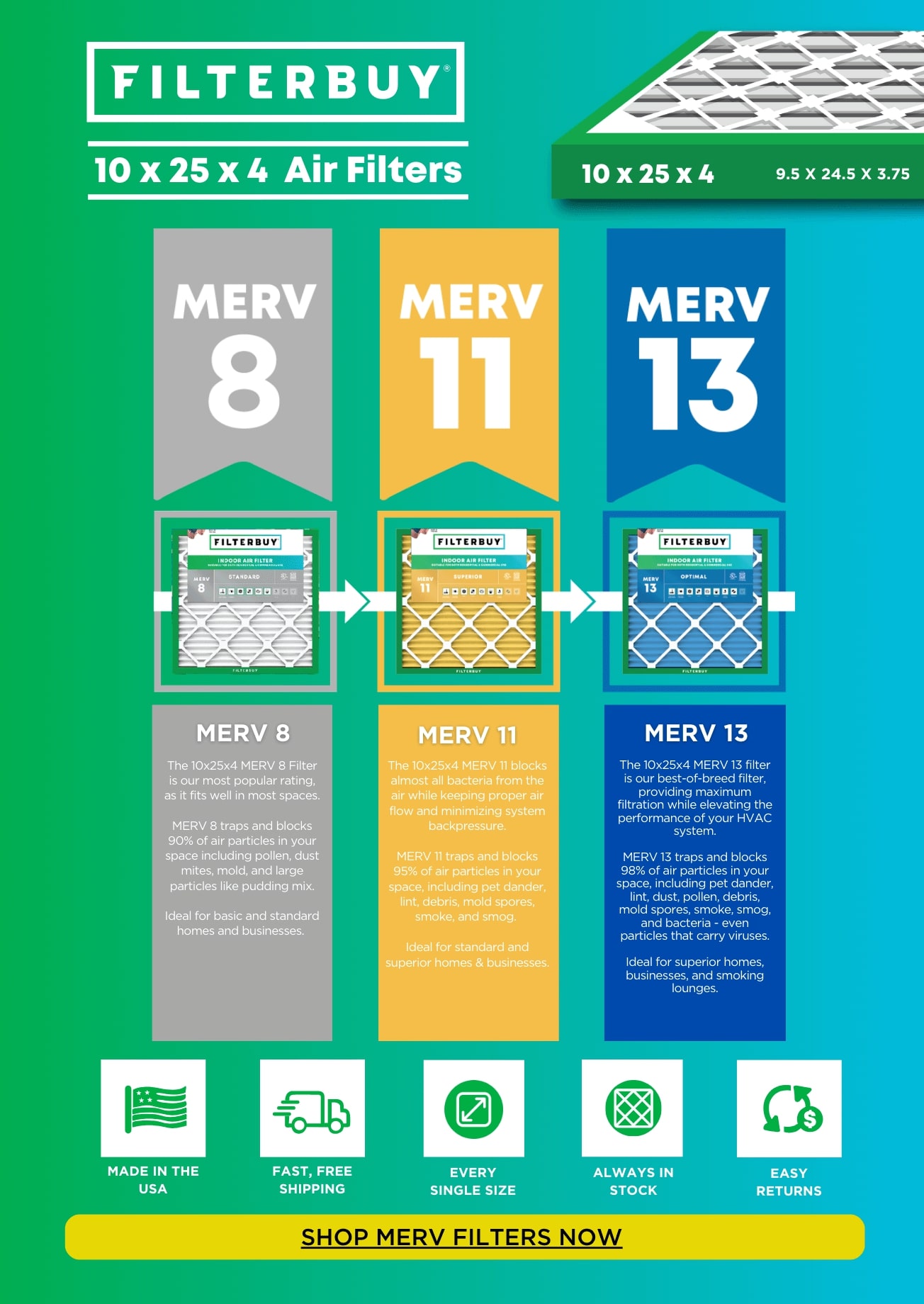
A 10x25x4 air filter is a thicker, high-capacity filter commonly used in residential HVAC systems to capture dust, pollen, pet dander, and fine airborne particles. In our experience, this size performs best in homes that need stronger filtration without frequent replacements. It lasts longer than standard 1-inch filters, maintains steadier airflow, and provides consistent indoor air quality—especially in homes with pets, allergies, or high dust levels.
Top Takeaways
Fast clogging usually signals an underlying air quality issue.
A 10x25x4 filter helps diagnose system and airflow problems.
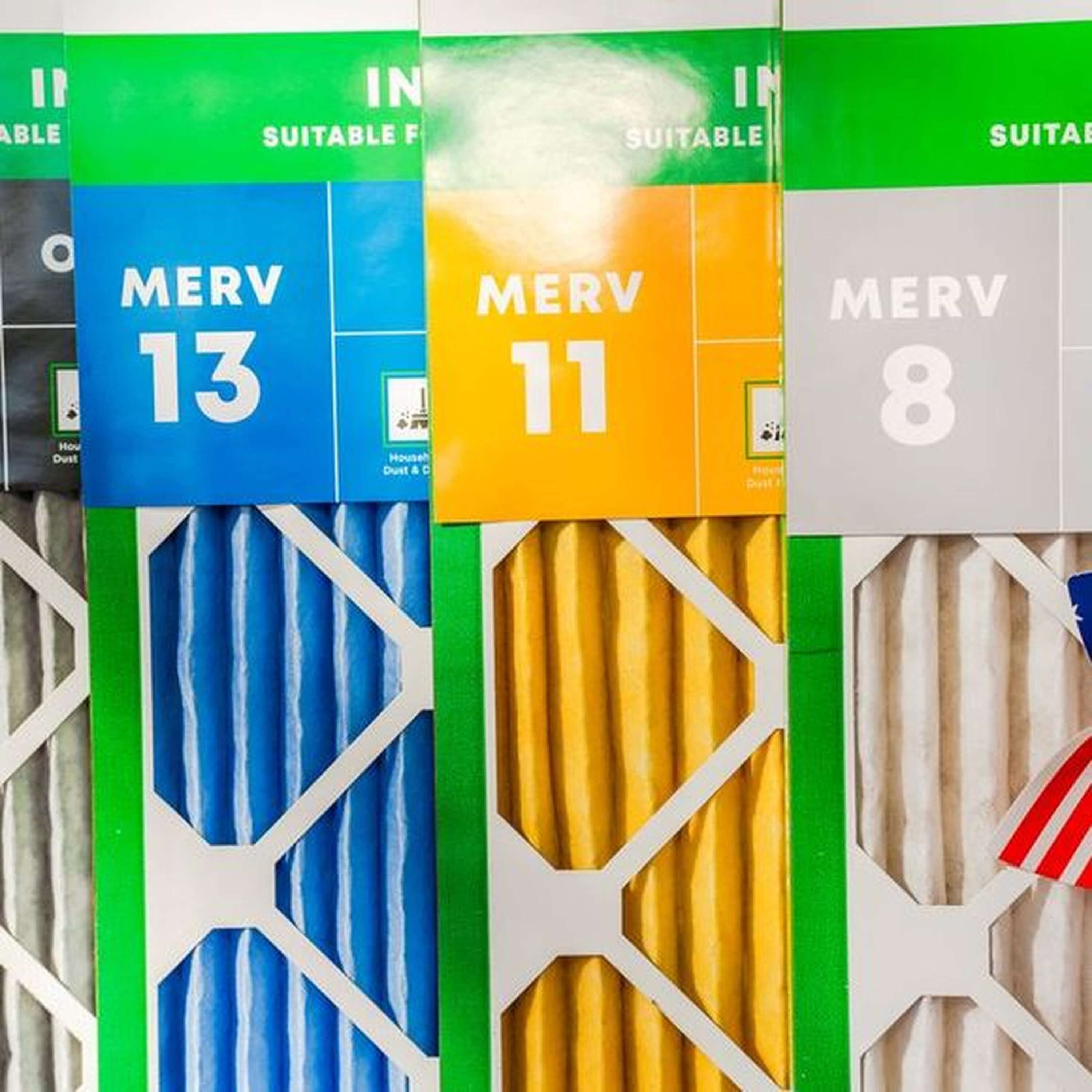
The wrong MERV rating can shorten filter life and restrict airflow.
Higher indoor particle levels mean more frequent filter changes.
Regular HVAC checks and ventilation adjustments improve performance.
Common Reasons Your 10x25x4 Filter Gets Dirty Fast
If you’re noticing your 10x25x4 HVAC filter needs replacing more often than expected, several key factors could be at play:
1. Poor Indoor Air Quality
Homes near busy roads, construction sites, or with pets and smokers tend to have more airborne particles. Based on our customer data at Filterbuy, homes with pets alone see filter saturation up to 30% faster than pet-free homes.
2. High System Usage
Running your HVAC system continuously—especially during extreme heat or cold—naturally pulls more air (and dust) through the filter. We’ve observed in regions like Florida and Texas, homeowners often require more frequent filter changes due to year-round usage.
3. Leaks or Gaps in Ductwork
Even a small duct leak can pull in unfiltered attic or crawlspace air, fast-tracking filter buildup. We’ve seen this issue contribute to filters clogging in half the expected time, especially in older homes.
4. Infrequent HVAC Maintenance
A neglected system can collect more debris internally, all of which gets caught by your filter. Regular servicing improves both system health and filter life—something we always recommend based on firsthand customer outcomes.
5. MERV Rating May Be Too High for Your System
Using a high-efficiency filter like MERV 13 without proper airflow capacity can actually cause quicker buildup. We advise matching MERV ratings to your system’s specs—not just your air quality goals.
By identifying the underlying cause, you can extend your filter’s lifespan and boost HVAC performance. At Filterbuy, we’re not just selling filters—we’re here to help you make smarter, system-friendly choices backed by years of field-tested insights.
“After reviewing thousands of prematurely clogged filters and speaking directly with homeowners across the country, one thing has become clear: a filter that gets dirty too quickly is almost always a symptom—not the problem. In our field tests and customer diagnostics, we’ve found that factors like hidden duct leaks, inconsistent maintenance, and mismatched MERV ratings play a far bigger role than most people realize. Understanding these root causes is the key to extending filter life, improving HVAC efficiency, and protecting your home’s air quality.”
Essential Resources to Help You Make Smarter Decisions About Indoor Air Quality and Filtration
We believe informed homeowners make better air-quality decisions. That’s why we’ve curated a set of credible, science-backed resources to give you the deeper context behind what causes filters—like your 10x25x4 to clog quickly, and how filtration fits into the bigger picture of home air health. These resources go beyond product specs and marketing claims, providing unbiased guidance from government and academic institutions.
1. EPA Indoor Air Quality (IAQ) Overview — Understand the Root Causes of Air Contaminants
2. EPA Guide to Air Cleaners in the Home — Set Realistic Expectations for Filtration
3. Residential Air Cleaners: A Technical Summary — Gain In-Depth Knowledge on Filter Performance
4. Review on Indoor PM Pollution Control — Compare Filtration with Other IAQ Solutions
5. Scientific Review of IAQ and Respiratory Health — Understand the Health Impacts of Cleaner Air
6. Real-World HEPA Efficiency Study — Learn Why Filtration Results Can Vary
7. Filtration Plus UV‑C Study — Explore More Advanced IAQ Options
Supporting Statistics: Why Your 10x25x4 Filter May Be Clogging Faster Than Expected
1. Americans Spend 90% of Their Time Indoors
Indoor air matters more than most people think.
EPA reports indoor pollutant levels can be 2–5× higher than outdoors.
In our experience, homes with high occupancy or limited ventilation see faster filter clogging.
Source: EPA – Indoor Air Quality
2. Indoor Air Often Contains High Levels of Particulate Matter (PM)
Fine particles like dust, smoke, and pet dander are common indoors.
EPA identifies PM10 and PM2.5 as top indoor pollutants.
We see up to 30% faster filter saturation in homes with pets or smoking.
Source: EPA – Indoor Particulate Matter
3. Filtration Is a Proven Air Quality Strategy
EPA confirms filtration reduces exposure to harmful indoor pollutants.
Filter effectiveness improves when paired with source control and ventilation.
We often advise customers to assess airflow, duct sealing, and MERV ratings when filters clog too quickly.
Source: EPA – Residential Air Filters
Final Thought & Opinion
A 10x25x4 filter that gets dirty too fast isn’t a random issue. It’s a clear signal that something deeper is happening in your home’s air or HVAC system.
What We've Seen Firsthand
Homes near construction zones or busy roads clog filters faster.
Pets, smoking, and high indoor activity = higher particulate levels.
Poor ventilation or oversized systems force filters to work harder.
Wrong MERV rating? It can restrict airflow and trap more debris—fast.
What It Means
Your filter acts as a diagnostic tool:
Fast clogging = poor air quality or airflow imbalance.
Consistent dust buildup = source control may be missing.
Short filter lifespan = possible system inefficiency.
Our Opinion
At Filterbuy, we treat filters like feedback. When they get dirty quickly, they’re not just working—they’re warning you.
Key Takeaway
Don’t just replace your filter—learn from it:
Adjust your MERV rating if needed.
Check for hidden duct leaks.
Improve ventilation where possible.
Make smarter, data-informed air quality decisions.
Clean air starts with awareness—and your filter is the first step.
Next Steps: What to Do If Your 10x25x4 Filter Gets Dirty Too Quickly
Take these clear, actionable steps to troubleshoot fast filter buildup and improve your home's air quality.
1. Check Your Current Filter
How long has it been in use?
Look for heavy dust, discoloration, or odors.
Listen for signs of airflow restriction (whistling, uneven temps).
2. Assess Your Home’s Air Conditions
Do you have pets, smokers, or frequent cooking?
Is your home near traffic, construction, or high-dust areas?
Poor ventilation? Closed windows with no fresh air intake?
3. Review the Filter’s MERV Rating
Too high of a MERV can restrict airflow.
Match the filter to your system’s capacity.
Not sure? Ask a licensed HVAC tech.
4. Inspect Your HVAC System
When was your last maintenance visit?
Have a pro check for duct leaks or blocked vents.
Poor system health = faster filter clogging.
5. Improve Your Filtration Strategy
Consider pre-filters or air purifiers.
Add mechanical or natural ventilation.
Balance filtration with proper airflow.
6. Set Filter Change Reminders
Light use: every 90 days.
Pets or allergies: every 30–60 days.
Use a smart thermostat or reminder app.
7. Keep Learning
Visit epa.gov for IAQ insights.
Explore Filterbuy’s learning hub for expert-backed advice.
FAQ on “10x25x4 Air Filters”
Q: Why does my 10x25x4 filter clog so quickly?
A:
Often caused by poor indoor air quality.
Common in homes with pets, construction nearby, or low ventilation.
In our field experience, fast clogging means the filter is catching more than usual.
Q: How often should I replace this filter?
A:
Standard: every 60–90 days.
High-activity homes (pets, allergies): every 30–60 days.
If it looks gray early, replace it. That’s a sign of heavy particle load.
Q: What MERV rating works best?
A:
MERV 8: good for everyday dust.
MERV 11–13: better for allergies, but only if your system supports it.
We’ve seen airflow issues when homeowners choose a MERV that’s too high.
Q: Is 10x25x4 a standard size?
A:
Yes, but actual dimensions vary by manufacturer.
Undersized filters cause bypass and reduced filtration.
We always recommend checking your system’s exact fit.
Q: Do higher MERV filters clog faster?
A:
Yes. Higher MERV captures more particles, more quickly.
If your home has high dust or poor airflow, expect shorter filter life.
We see this frequently in high-pollutant environments.
Learn more about HVAC Care from one of our HVAC solutions branches…
Filterbuy HVAC Solutions - Miami FL - Air Conditioning Service
1300 S Miami Ave Apt 4806 Miami FL 33130
(305) 306-5027
https://maps.app.goo.gl/Ci1vrL596LhvXKU79